Into the (Un)known – A View from Practice by Dagmar Szabó
Domestic abuse, intervention by foreign authorities and the protection of Slovak children abroad
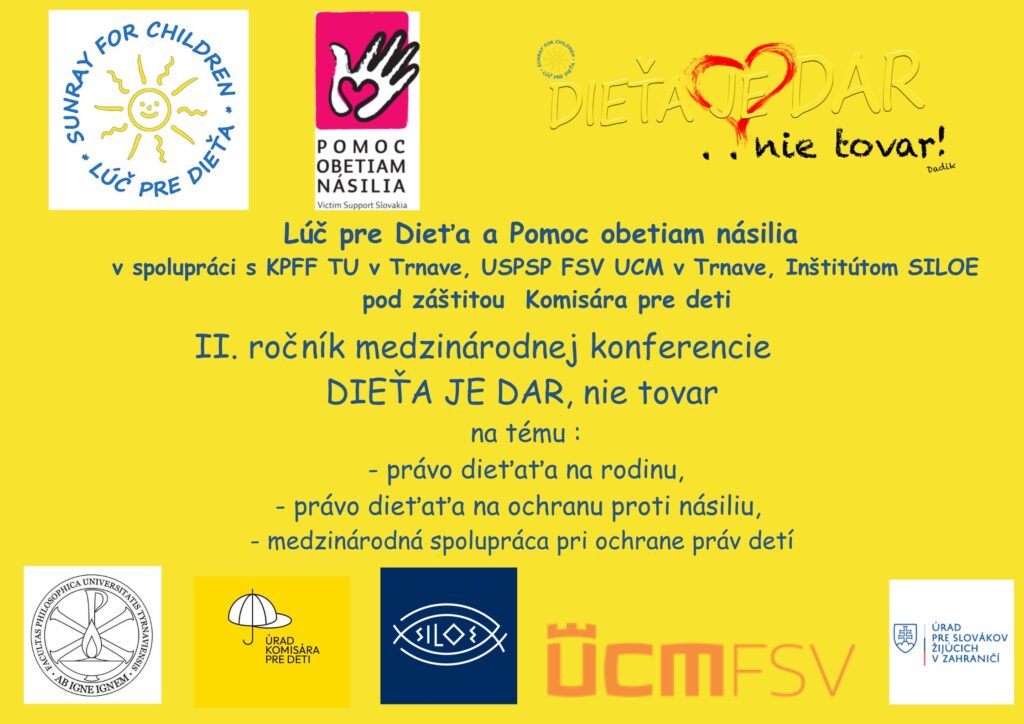
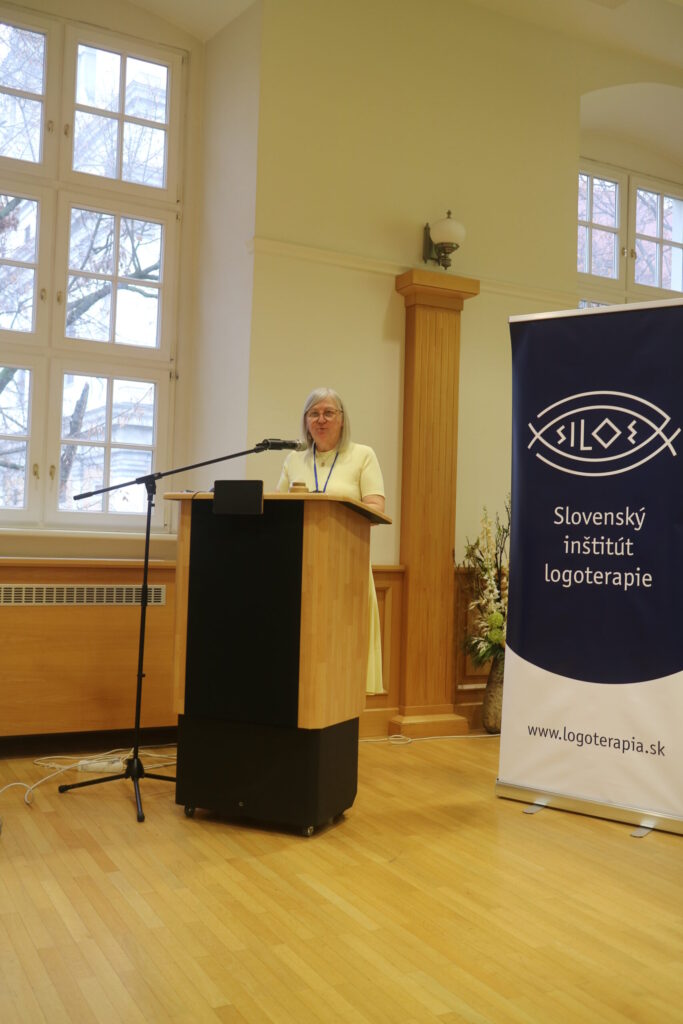
One of the main themes of the conference A CHILD IS A GIFT, NOT A COMMODITY was the lecture Into the (Un)known, which I gave myself – Dagmar Szabó, founder of Lúč pre dieťa and Sunray for Children.
This topic grew out of my many years of work with families and children who found themselves in crisis abroad. I focused on the reality of Slovaks living outside Slovakia and on the moments when a personal story meets an unfamiliar legal, social and cultural system – often without enough information, protection or support.
When life abroad turns into a fight for a child
Moving abroad for work or a better life is common today. But when a family breaks down, when there is domestic abuse, or when foreign institutions intervene, the journey to a new life can very quickly become a journey into the (un)known.
In my lecture I described specific situations that Slovak families abroad face – often unprepared, frightened and without professional help.
Domestic abuse and the strict approach of foreign authorities
In cases of domestic abuse there is a marked difference between the approach in Slovakia and abroad.
If a victim stays in an abusive relationship for a long time, foreign institutions often conclude that she, too, is responsible for putting the children at risk. In practice, this means that both the victim and the abuser are assessed as potentially risky parents.
When a school, the police or social services contact the family, parents naturally react with fear and uncertainty. Yet it is precisely fear and poor communication that often make the situation escalate.
In many countries the procedure is very harsh – the child is removed immediately, and only afterwards is the parents’ guilt or innocence examined. This process can take from six months to several years, during which the child is separated from the family.
Problems with documents and proving a child’s Slovak identity
A very common and extremely serious problem is missing documents. In practice we see situations where a child:
- has no Slovak identity documents,
- has no passport or birth certificate,
- has no confirmed Slovak citizenship.
In international proceedings this makes it much harder to prove the child’s Slovak nationality, which can fundamentally affect the court’s decision and the possibility of the child returning to Slovakia.
Help from the embassy – and systemic shortcomings revealed
I would like to highlight our cooperation with the Slovak Embassy in Great Britain, which has recently been joining court hearings online as an observer on a regular basis. For families this is significant emotional support, and for foreign institutions a clear signal that the Slovak Republic is actively following the case.
At the same time, one recent case showed that our system is still not ready for the return of children from abroad.
After long court proceedings, the child was placed in the care of the grandmother and the court allowed the transfer to Slovakia. When the plane landed, we all breathed a sigh of relief.
The next day, however, a British social worker appeared on the territory of the Slovak Republic, tried to accompany the child to their place of residence and then checked the family’s circumstances.
This case clearly shows that Slovakia does not have a modern, unified mechanism for taking a child into its own jurisdiction.
The change we need – a clear and fast procedure when a child returns
Since 1989 the world has changed considerably. Families move between countries, international families are formed, and cross-border cases are no longer exceptional. Yet our procedures still do not reflect this reality well enough.
I therefore propose that when a child returns from abroad:
- CIPC or another designated Slovak institution should be present on arrival,
- the child should be taken into Slovak jurisdiction without delay,
- the authority of foreign social services should end,
- unauthorised interventions by foreign workers should be prevented.
It must be stressed that a social worker has authority only on the territory of their own country. An exception is possible only on the basis of an official request through the Ministry of Justice of the Slovak Republic. Otherwise it is an unlawful intervention.
Conclusion
Experience shows that Slovak children living abroad need a better system of protection, faster access to information and clear links between Slovak institutions.
The number of children returning is not yet high, but it is rising. That is why now is the time to change our procedures.
A child is a gift, not a commodity.
And it is our duty to protect this gift – at home and across borders.
Acknowledgement
This contribution, Into the (Un)known, was made possible thanks to financial support from the Office for Slovaks Living Abroad.
We sincerely thank the Office for supporting activities that highlight the complex reality of life for Slovak families abroad and help protect children’s rights beyond the borders of the Slovak Republic.
Dagmar Szabó
Need help with a similar situation?
We support Slovak and Czech families in the UK – in confidence, free of charge.
Contact us